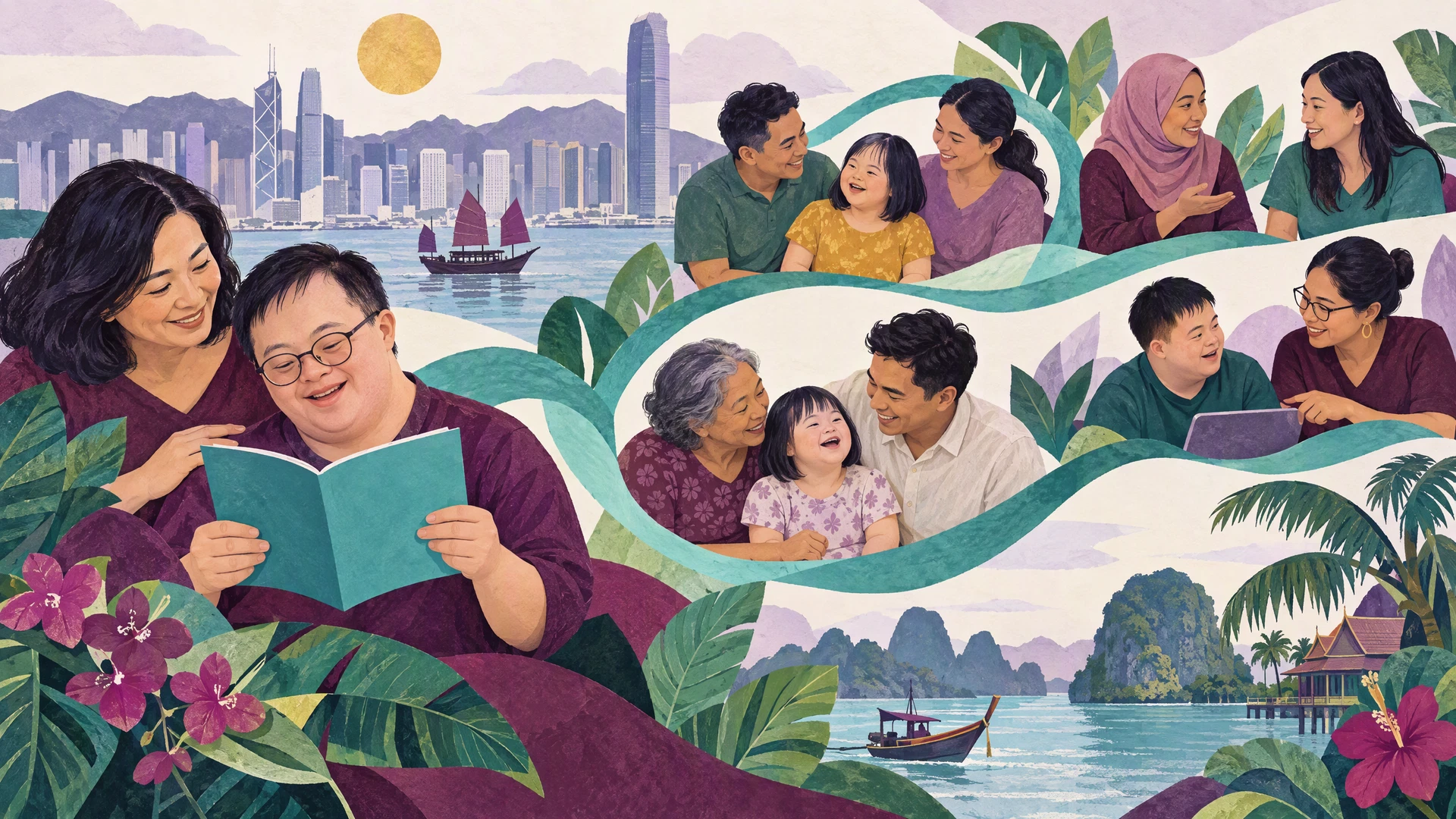
Everything ALBE has gathered for Hong Kong families in one place: where to start after a diagnosis, ten in-depth guides, local services grouped by topic, community circles and Cantonese-language videos.
Source languages: English · Traditional Chinese · Hub summaries in English and Traditional Chinese
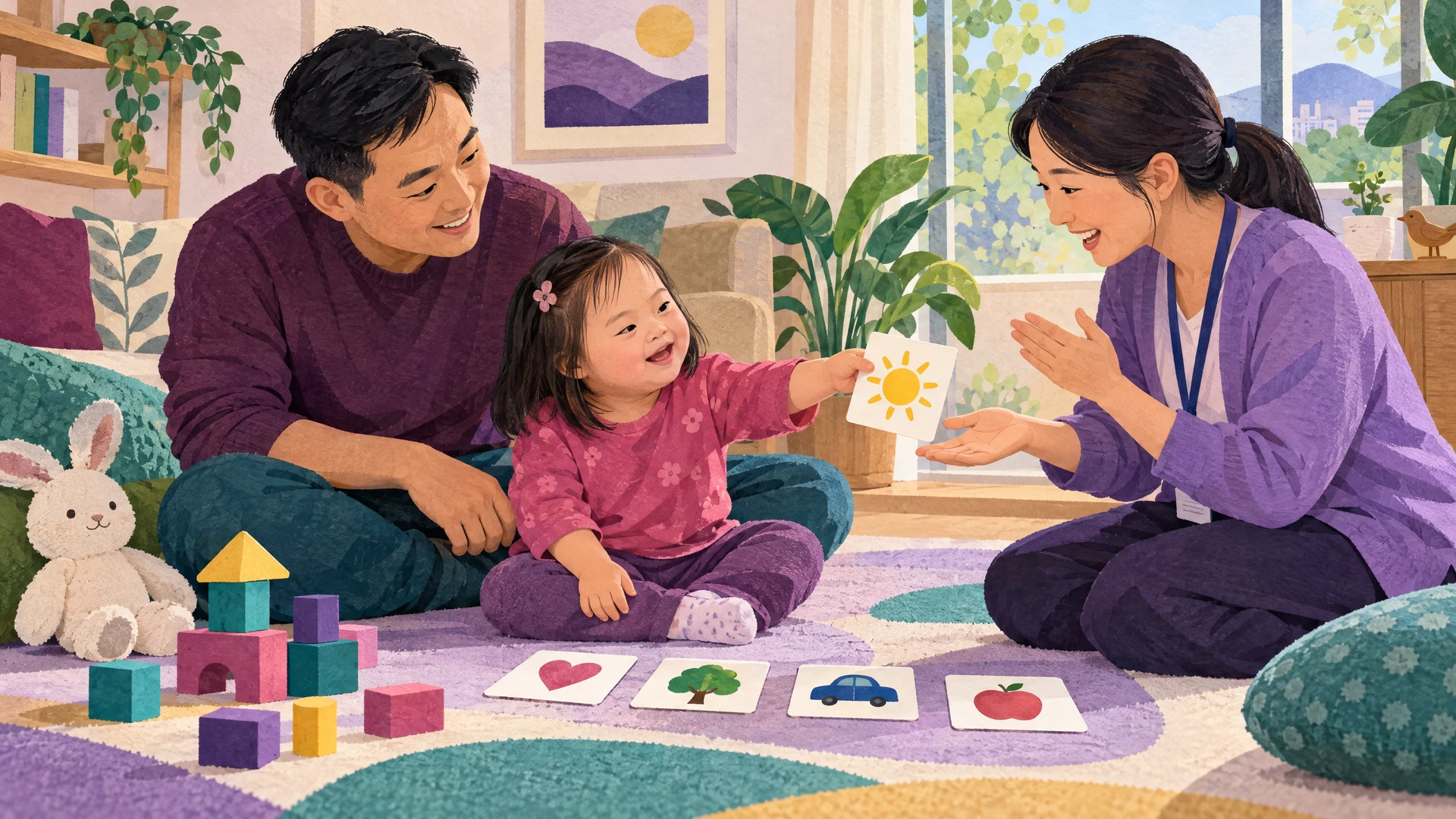
IllustrationConceptual illustration, not an event photograph or an individual’s story.
Start here
A calm, practical guide to chromosome 21, the three forms of Down syndrome, prenatal screening and diagnosis, genetic counselling, and first steps after a new diagnosis. It is educational information, not a personal medical decision.
First steps
Keep the written screening or chromosome report, and ask the care team to explain unfamiliar terms in plain language.
Book the recommended maternity, paediatric, or genetics appointment; ask what is urgent and what can wait.
Write down three questions and bring a trusted person or interpreter if that helps you participate.
Ask about local family or peer support, including HKDSA, while checking current eligibility, fees, language, and availability.
Share only what you choose. Give the baby or person privacy, a name, and time to be known beyond the diagnosis.
Questions worth asking
Is this a screening result or a confirmed diagnosis, and what evidence supports that interpretation?
What does the chromosome report say about trisomy 21, translocation, or mosaicism?
What are the benefits, limits, timing, and risks of each next test for our situation?
Who can provide genetic counselling and explain recurrence questions without making decisions for us?
Which local services can support communication, development, emotional wellbeing, and family connection now?
A calm, practical guide to chromosome 21, the three forms of Down syndrome, prenatal screening and diagnosis, genetic counselling, and first steps after a new diagnosis. It is educational information, not a personal medical decision.
A person-centred guide to coordinating care, preparing useful health conversations and supporting wellbeing for people with Down syndrome from childhood through adulthood and ageing.
A practical, person-centred guide to child-led play, speech and language, visual learning, motor skills, AAC, therapy collaboration and everyday routines for children with Down syndrome.
A practical guide for Hong Kong families supporting a learner with Down syndrome through school inclusion, meaningful goals, accessible learning, friendships and a confident transition into the teen years.
A practical, person-centred guide to puberty education, privacy, consent, friendships, relationships, online safety, emotional wellbeing and transitions for teens and young adults with Down syndrome.
A practical Hong Kong guide to exploring strengths, building work skills, finding suitable support and sustaining meaningful employment for people with Down syndrome.
A practical, person-centred guide for teenagers and adults with Down syndrome, families and supporters in Hong Kong. It covers travel, money, home routines, supported decision-making, rights, service navigation, housing and future care. This is educational information, not individual legal, financial or medical advice.
A practical, person-centred guide to healthy ageing, noticing meaningful change, seeking a careful medical assessment, and planning sustainable support for adults with Down syndrome.
A practical, person-centred guide to family communication, sibling relationships, caregiver wellbeing, respite conversations and consent-based community support for families connected to Down syndrome.
A person-centred guide to finding Down syndrome information, family support, skills programmes and community contacts in Hong Kong, Singapore, Malaysia and the Philippines. It explains how to check eligibility, language, waiting times and fees before committing to a service.
A Hong Kong government health page that explains its Hospital Authority information source and points families toward discussion with doctors, hospitals and community organisations; its detailed content is prenatal screening.
Hong KongEnglish
Hong Kong Department of Health Family Health Service
Hong Kong Down Syndrome Association information on career planning, employment advice, workshops and follow-up pathways for people with Down syndrome aged 15 or above and caregivers.
Hong Kong Social Welfare Department overview of structured vocational training, job attachment, job matching, supported employment and life-skills activities.
Hong Kong Down Syndrome Association information on career planning, employment advice, workshops and follow-up pathways for people with Down syndrome aged 15 or above and caregivers.
Hong Kong Social Welfare Department overview of structured vocational training, job attachment, job matching, supported employment and life-skills activities.
Hong Kong Down Syndrome Association information on career planning, employment advice, workshops and follow-up pathways for people with Down syndrome aged 15 or above and caregivers.
A gentle space for parents in the first months after a prenatal or birth diagnosis to ask everyday questions and hear from families a few steps ahead.
Who: Expecting and new parents in Hong Kong
Where: Hong Kong
Languages: English · Chinese
When: Monthly online coffee chat (example)
Adults 18+
Example
Early years: play, speech & movement
Swap home-play ideas, signing tips and questions to bring to therapists, with professional input shared only as general information.
Who: Families of children aged 0–6
Where: Hong Kong
Languages: English · Chinese
When: Weekly tip thread (example)
Adults 18+
Example
School years & SEN support circle
Talk through school choices, SEN meetings, homework routines and friendships, and share what helped your child feel they belong.
Who: Parents and carers of school-age children
Where: Hong Kong
Languages: English · Chinese
When: Termly online Q&A (example)
Adults 18+
Example
Parents of teens: growing up together
For parents and carers navigating puberty, friendships, privacy, phones and the first conversations about life after school.
Who: Parents and carers of teenagers (not for teens themselves)
Where: Hong Kong
Languages: English · Chinese
When: Fortnightly topic prompt (example)
Adults 18+
Example
Adult life: training, work & routines
Share job tasters, training experiences, travel-training wins and routines that make weekdays work for young adults.
Who: Families and supporters of adults with Down syndrome
Where: Hong Kong
Languages: English · Chinese
When: Monthly opportunity round-up (example)
Adults 18+
Example
Self-advocates’ coffee club (18+)
A friendly chat for adults with Down syndrome to plan meet-ups, share news and practise speaking up, with easy-read messages and a supporter in the group.
Who: Adults with Down syndrome, with a chosen supporter if they wish
Where: Hong Kong
Languages: English · Chinese
When: Monthly meet-up vote (example)
Adults 18+
Example
Dads’ circle
Low-pressure chat and occasional hikes, football or dim sum for fathers and father figures at any stage.
Who: Fathers and father figures
Where: Hong Kong
Languages: English · Chinese
When: Quarterly outing (example)
Adults 18+
Example
Later life & future planning
Compare notes on health changes in later life, care arrangements, trusts and wills, and invite professionals for general information sessions.
Who: Families planning ahead and caring for older adults
Where: Hong Kong
Languages: English · Chinese
When: Twice-yearly talk (example)
Adults 18+
Example
Inclusive sport & weekend plans
Find swimming, dance, football, drama and hiking options and team up for weekend outings that welcome everyone.
Who: Families of all ages
Where: Hong Kong
Languages: English · Chinese
When: Weekend plans every Thursday (example)
Adults 18+
Example
Carers & domestic helpers learning circle
Practical tips, translated resources and encouragement for the domestic helpers and relatives who share daily care in many Hong Kong homes.
Who: Domestic helpers and relatives, with the family’s agreement
Does a higher-chance prenatal screen mean the baby definitely has Down syndrome?
No. A screening result estimates likelihood and is not a diagnosis. Discuss confirmatory options, their timing and risks with the maternity or genetics team. A lower-chance result also cannot guarantee that no condition is present.
Did something the parents did cause Down syndrome?
Available guidance says there is no evidence that anything done before or during pregnancy causes Down syndrome. The chromosome pattern usually occurs by chance, while translocation findings may warrant genetics discussion about family chromosomes.
Can a Hong Kong family simply enrol in a Singapore, Malaysian or Philippine programme?
Not necessarily. The sources show that these organisations provide support or programmes, but they do not establish cross-border eligibility. Ask the provider about residence, age, referral, membership, language, fees and waiting lists. A published contact is an invitation to enquire, not proof of admission.
Where should a Hong Kong family begin if it does not know which service fits?
Describe one concrete goal and ask a public health, education or social-welfare contact about the correct route. Hong Kong's official rehabilitation information describes referral links among child assessment, Hospital Authority, Education Bureau and specialist services. HKDSA also publishes several units that can be contacted about family, training or employment-related enquiries. Confirm the current route and eligibility directly.
Ask for the full pathway cost, not only the advertised session fee. Include assessment, registration or membership, transport, materials, interpretation, cancellation rules and possible repeat visits. Ask whether funding is tied to citizenship, residence or a particular referral route. Do not assume a programme is subsidised because the organisation is voluntary or non-profit.